
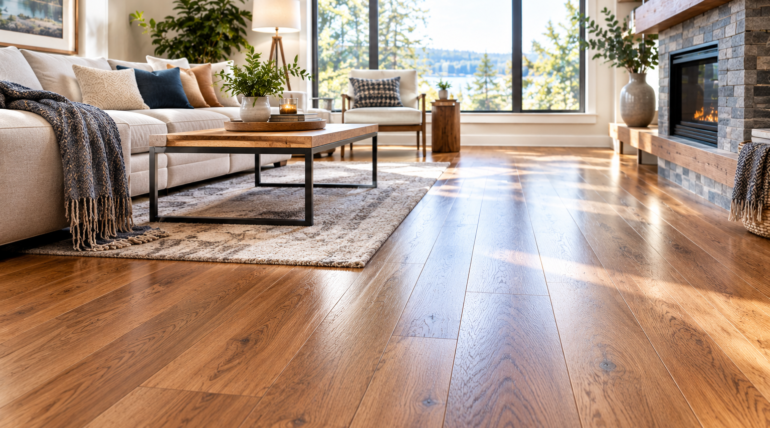
Canadian hardwood flooring,If you’ve spent any time walking through older Ontario neighbourhoods, you’ve probably noticed how many homes still have their original hardwood floors worn in places, a little uneven near the doorways, but somehow still beautiful after fifty or sixty years. That’s really the story of Canadian hardwood flooring in one image. It’s a material that ages with a home rather than against it, which is a big part of why it remains one of the most requested upgrades we hear about from homeowners planning a renovation.
Hardwood has never really gone out of style here, but it has changed. The species, finishes, and plank widths homeowners are choosing today look different from what their parents picked in the 1980s. At the same time, the reasons people choose hardwood floors Canada wide haven’t changed much at all durability, comfort underfoot, and the way wood grain makes a room feel finished without trying too hard.
This guide is meant to walk you through what Canadian hardwood flooring actually involves: the types available, how to choose the right one for your home, what Ontario’s climate and older housing stock mean for your decision, and how flooring fits into a larger renovation. We’ll also touch on where Signature Floors Renovations can help, but the goal here is mostly to give you a useful, honest resource before you make a decision.
Why Canadian Hardwood Flooring Remains a Popular Choice
There’s a practical reason hardwood keeps showing up on renovation wish lists: it works in almost every room, in almost every style of home, and it tends to outlast most other flooring materials if it’s cared for reasonably well. A carpet might need replacing every eight to ten years. Hardwood, refinished a couple of times over its life, can realistically serve a household for decades.hardwood flooring from Canada
Part of the appeal is also cultural. Canadian wood flooring is tied to the country’s forestry industry in a way that feels familiar to a lot of homeowners oak and maple aren’t exotic imports, they’re species people grew up around. That local connection matters to buyers who like knowing where their materials come from, even if it’s a secondary consideration compared to how the floor actually performs.
Then there’s resale appeal. Real estate agents will tell you that hardwood floors photograph well and tend to read as a sign that a home has been maintained. We’re not going to claim it guarantees a higher sale price that depends on the market, the neighbourhood, and a dozen other factors but it’s fair to say hardwood is rarely seen as a downside when a home goes up for sale.
Understanding Hardwood Flooring From Canada
When people talk about hardwood flooring from Canada, they’re usually referring to floors made from domestic hardwood species most commonly oak, maple, birch, and ash milled and finished either solid or engineered. Solid hardwood is exactly what it sounds like: a single piece of wood from top to bottom, which can be sanded and refinished many times over its lifespan. Engineered hardwood, on the other hand, has a real hardwood veneer on top of layered plywood or high-density fibreboard, which gives it more dimensional stability in homes where humidity swings from season to season.Canada flooring
Neither option is inherently “better.” It really comes down to where the flooring is going, what your subfloor looks like, and how much movement your home experiences through the seasons something that matters more in Canada than in more climate-stable regions, given how dramatically our humidity shifts between January and July.
Popular Hardwood Floors Canada Homeowners Consider
Oak Hardwood Flooring
Oak is still the default choice for a lot of homeowners, and for good reason. It’s hard-wearing, takes stain well, and has a grain pattern that suits almost any interior style, from a farmhouse kitchen to a fairly minimalist living room. Red oak has a warmer, slightly pink undertone; white oak leans more neutral and has become especially popular over the last several years because it pairs so easily with greys, whites, and warm off-whites.
Maple Hardwood Flooring
Maple has a tighter, more subtle grain than oak, which gives it a cleaner, more contemporary look. It’s also one of the hardest domestic species available, which makes it a solid choice for busy households with kids or pets. The trade-off is that maple can be a bit less forgiving to refinish evenly because it doesn’t absorb stain as uniformly as oak does something worth discussing with your installer if you’re set on a darker maple floor.
Engineered Hardwood Flooring
Engineered hardwood has come a long way from its reputation as a “cheaper alternative.” Good-quality engineered flooring now comes in wide planks, hand-scraped textures, and finishes that are genuinely difficult to distinguish from solid hardwood once installed. Its main advantage is stability it handles humidity changes better, which makes it a practical option for basements, over radiant heating, or in homes with less consistent climate control.
Wide-Plank Hardwood Flooring
Wide-plank flooring, generally anything over five inches, has become one of the more requested looks in newer builds and renovated homes alike. Fewer seams mean the floor reads as more open and continuous, which suits the open-concept layouts so many Ontario homeowners are renovating toward. It does show subfloor imperfections more readily than narrower planks, so subfloor prep becomes even more important.
Canadian Wood Flooring for Different Interior Styles
A century home in a mature Toronto neighbourhood and a newly built house in a Brampton subdivision are going to call for different flooring decisions, even if both homeowners are drawn to the same species. Traditional homes tend to suit narrower plank widths, richer or more natural tones, and finishes with a bit more sheen. Modern builds generally lean toward wider planks, matte finishes, and lighter or more neutral colour tones that keep a large open space from feeling heavy.
Transitional interiors which describes a lot of renovated Ontario homes right now usually do well with something in between: medium-width planks, a warm but not overly orange tone, and a satin finish that isn’t too glossy or too flat. If you’re not sure which category your home falls into, it often helps to look at your existing trim, cabinetry, and window style, since those tend to set the tone the flooring needs to match.
Canada Flooring Trends for Modern Homes
Natural Wood Finishes
Homeowners have moved away from the heavily amber, orange-toned finishes that were everywhere in the early 2000s. Right now, the preference leans toward finishes that let the wood’s natural colour show through with minimal added tint.
Warm Neutral Tones
Pure grey flooring, which had a strong run several years ago, has softened into warmer neutral tones think driftwood, natural oak, and light taupe. These colours tend to age better and pair with more furniture and paint choices over time.
Light Hardwood Flooring
Lighter floors make smaller rooms feel larger and brighter, which is part of why they’ve become so common in Canada flooring choices for condos and smaller urban homes across the GTA.
Wide-Plank Designs
As mentioned above, wide planks continue to trend upward, particularly in engineered formats that offer the stability needed for larger format boards.
Consistent Flooring Throughout the Home
Rather than switching flooring types room to room, many homeowners are choosing one hardwood flooring style and running it through the main living areas, kitchen, and hallways for a more cohesive, continuous feel reserving tile or vinyl mainly for bathrooms and mudrooms.
Choosing Hardwood Flooring for an Ontario Home
Ontario’s housing stock is a mix of eras and architectural styles, which means there isn’t one universal answer to “what hardwood should I choose.” A lot depends on where in the province you’re located and what kind of home you’re working with.
In London, Ontario, we see a good number of older character homes alongside newer suburban builds, so the flooring decision often comes down to whether a homeowner wants to preserve a traditional look or modernize the interior while keeping the original character of the neighbourhood intact.
Homeowners in Cambridge and Kitchener-Waterloo are often renovating homes with a mix of styles too, from converted heritage buildings downtown to newer developments on the outskirts. In these cases, we tend to talk through how much natural light a room gets, since that affects how a given wood tone will actually look once installed.
In Toronto and Mississauga, space is often at a premium, so wide-plank and light-toned hardwood flooring tend to be popular choices for making smaller condos and townhomes feel more open. Older Toronto homes with their original hardwood sometimes just need refinishing rather than full replacement, which is worth checking before assuming a full flooring renovation is necessary.
Brampton and Burlington have a lot of newer subdivisions where homeowners are often replacing builder-grade flooring with something more durable and better suited to their taste, particularly in high-traffic areas like kitchens and family rooms.
And in Oakville, where a lot of renovations lean toward a more upscale, polished aesthetic, we tend to see stronger interest in engineered wide-plank hardwood with matte, natural finishes that complement higher-end cabinetry and trim work.
What to Consider Before Buying Canadian Hardwood Flooring
Before settling on a specific product, it’s worth thinking through a handful of practical factors:
- Room usage – A home office has very different flooring needs than a mudroom or kitchen.
- Foot traffic – High-traffic areas benefit from harder species and more durable finishes.
- Lighting – Natural and artificial light can shift how a wood tone reads in person versus in a sample.
- Existing interior design – Trim, cabinetry, and furniture colours should inform your flooring choice, not the other way around.
- Flooring colour – Lighter tones tend to hide dust, darker tones tend to hide scratches.
- Subfloor condition – Uneven or damaged subfloors need to be addressed before any hardwood goes down.
- Moisture – Basements and areas near exterior doors need extra consideration, often pointing toward engineered options.
- Installation requirements – Some products are nail-down, some are glue-down, and some float — each has different subfloor and acclimation needs.
- Maintenance – Some finishes require more upkeep than others.
- Budget and value – The cheapest option upfront isn’t always the best value over a ten or twenty-year horizon.
Professional Hardwood Flooring Installation Matters
It’s tempting to think of hardwood installation as a straightforward job, but there’s a fair amount that goes into doing it properly. Subfloor preparation alone can make or break the final result any dips, humps, or moisture issues in the subfloor will eventually show up in the finished floor if they’re not corrected first.
Accurate measurements and layout planning matter too, particularly with wide-plank flooring where even small miscalculations become obvious. Board direction is another detail homeowners don’t always think about; running boards parallel to the longest wall or the main light source generally creates a more balanced look, but that’s not always the right call depending on the room’s shape.
Transitions between rooms, especially where hardwood meets tile or carpet, need to be planned carefully so they don’t become a tripping hazard or an eyesore. And the installation method itself nail-down, glue-down, or floating needs to match both the product and the subfloor type. Finishing and quality control at the end of the job are what separate a floor that looks good on install day from one that still looks good five years later.
Hardwood Flooring and Kitchen Renovations
Kitchens see more foot traffic, spills, and temperature changes than almost any other room in the house, which makes flooring choice especially important during a kitchen renovation. Engineered hardwood tends to hold up better here than solid hardwood, partly because of its stability and partly because it’s a bit more forgiving if there’s the occasional spill that isn’t wiped up right away.
In open-concept homes, which describes a large share of the renovations we see across Ontario right now, running the same hardwood flooring from the kitchen into the living and dining areas helps the whole main floor feel like one continuous space rather than a series of disconnected rooms.
Hardwood Flooring for Living Rooms
Living rooms are usually where homeowners want their flooring to make the strongest impression, since it’s the space guests see first and family spends the most time in. Wider planks and natural or warm-neutral finishes tend to work well here, especially in rooms with large windows that bring in plenty of natural light. Because living rooms generally see moderate rather than heavy foot traffic, there’s a bit more flexibility to choose a softer species or a lighter finish than you might in a kitchen or entryway.
Hardwood Flooring for Bedrooms
Bedrooms are one of the more forgiving spaces for hardwood, since foot traffic is lower and comfort tends to matter more than pure durability. Warmer tones often suit bedrooms well, creating a cozier feel, though this really comes down to personal preference and the rest of the room’s palette. Maintenance in bedrooms is generally minimal regular sweeping or vacuuming and the occasional damp mop is usually enough.
Can Hardwood Flooring Work in Older Ontario Homes?
Older Ontario homes the kind with plaster walls, original trim, and character you don’t find in newer builds can absolutely work with hardwood flooring, and in many cases already have it hiding under old carpet. Before assuming new flooring is needed, it’s worth checking whether original hardwood exists underneath, since refinishing existing floors is often more cost-effective than a full replacement and preserves more of the home’s original character.
Where new hardwood is being installed in an older home, matching plank width, tone, and finish to the home’s era can help the renovation feel intentional rather than mismatched. That said, plenty of homeowners choose to modernize deliberately, using a more contemporary wide-plank floor as a way of updating an older home’s interior while keeping its structural character intact. Both approaches are valid it really depends on what you’re trying to achieve with the renovation.
Maintaining Your Canadian Hardwood Flooring
Hardwood floors don’t require constant attention, but a few consistent habits go a long way toward keeping them looking good for years:
- Sweep or vacuum regularly to remove grit that can scratch the finish
- Use a damp (not wet) mop, and avoid excess standing water
- Wipe up spills promptly, especially in kitchens
- Use furniture pads under chair and table legs
- Maintain consistent indoor humidity where possible, since Canadian winters can dry out both the air and the wood
- Avoid direct, prolonged sun exposure on one section of flooring, which can cause uneven fading over time
Protecting Hardwood Floors From Everyday Wear
Beyond routine cleaning, a few practical habits help protect hardwood from the everyday wear of family life. Placing mats at exterior entrances catches grit and moisture before it reaches the floor. Trimming pet nails regularly reduces scratching. Area rugs in high-traffic zones hallways, in front of the kitchen sink, at the base of stairs can meaningfully extend the life of the finish in those spots. And rotating furniture occasionally helps prevent the kind of uneven wear patterns that become noticeable over several years.
When Should You Repair or Replace Hardwood Flooring?
This depends largely on the extent of the damage and the condition of the wood underneath the finish. Light scratches and surface wear are usually addressed with a refinish, which sands down the top layer and applies a new finish coat. Deeper gouges or water damage in a localized area might call for a partial replacement of individual boards, which is possible with solid hardwood and some engineered products, though matching the existing finish exactly can be tricky.
Full replacement generally makes sense when the wood itself has been compromised significant water damage, structural subfloor issues, or a floor that’s already been sanded down close to its wear layer limit. If you’re not sure which category your situation falls into, it’s worth having someone take a look in person before deciding, since what looks like extensive damage from a photo is sometimes a straightforward refinish job.
Canadian Hardwood Flooring for Complete Home Renovations
Flooring rarely exists in isolation during a larger renovation. It connects directly to kitchen renovations, where cabinet toe-kicks and appliance clearances need to account for the new floor height. It factors into bathroom renovations, where transitions to tile need careful planning. Basement renovations often call for engineered hardwood specifically because of moisture considerations below grade.
Living room and bedroom renovations tend to be more straightforward from a flooring standpoint, but still benefit from being planned alongside paint colours and trim updates. Stair updates are another area where flooring choice matters quite a bit, since stairs see concentrated wear and benefit from matching the main floor’s species and finish for a cohesive look throughout the home. When flooring is planned as part of a broader interior renovation rather than as an afterthought, the finished result tends to feel far more unified.
How to Select the Right Hardwood Colour
Colour selection often comes down to the balance between light and dark tones already present in a home. Light flooring works well in smaller or darker rooms, helping them feel more open. Medium tones are probably the most versatile choice, pairing easily with a wide range of wall colours, cabinetry, and furniture styles, which is part of why they remain a popular middle-ground choice for homeowners who aren’t sure what direction to commit to long-term.
Dark flooring can look striking in larger, well-lit spaces, though it does show dust and scuffs more readily than lighter tones. Natural wood tones closer to the species’ own colour with minimal added stain have become increasingly popular because they tend to age gracefully and don’t tie a home too tightly to a passing trend.
Why Flooring Should Be Part of Your Renovation Plan
One mistake we see fairly often is homeowners finalizing paint colours, cabinetry, and furniture before giving any thought to flooring. It’s usually easier to work in the other direction. Flooring covers the largest surface area in most rooms, so it makes sense to choose it early and build the rest of the palette around it, rather than trying to match a floor to decisions that have already been locked in. Bringing flooring into the renovation conversation at the start, rather than treating it as a final step, tends to produce a more cohesive result and can help avoid costly changes later in the process.
Frequently Asked Questions About Canadian Hardwood Flooring
Is Canadian hardwood flooring a good choice for Ontario homes? Generally, yes. Ontario’s climate does bring seasonal humidity shifts, but with the right species, finish, and installation approach solid or engineered, depending on the room — hardwood flooring performs well in most Ontario homes, from older character properties to new builds.
What types of hardwood flooring are popular in Canada? Oak and maple remain the most common domestic species, with engineered hardwood gaining ground for its stability. Wide-plank formats and natural, lightly tinted finishes are currently the most requested styles.
Is hardwood flooring difficult to maintain? Not particularly. Regular sweeping, occasional damp mopping, and prompt spill cleanup cover most of what’s needed. It’s a lower-maintenance option than many homeowners expect.
Is hardwood suitable for modern Ontario homes? Yes. Wide-plank engineered hardwood in light or warm neutral tones is a common choice in newer, open-concept Ontario homes and tends to suit contemporary interior styles well.
How long can hardwood flooring last? Solid hardwood can last several decades, especially with periodic refinishing. Engineered hardwood’s lifespan depends on the thickness of its wear layer, but quality products can also last many years with proper care.
Can hardwood flooring be repaired instead of replaced? Often, yes. Light to moderate wear is usually addressed through refinishing, and localized damage can sometimes be repaired with board replacement rather than redoing the entire floor.
Should flooring be selected before a kitchen renovation? It’s generally a good idea. Flooring height affects cabinet installation and appliance clearances, so choosing your flooring early helps avoid complications later in a kitchen renovation.
Why is professional hardwood installation important? Proper subfloor preparation, acclimation, layout, and finishing all affect how a floor performs over time. Professional installation helps avoid issues like gapping, cupping, or uneven wear that can result from shortcuts during the process.
Final Thoughts on Canadian Hardwood Flooring
Choosing hardwood flooring is rarely just about picking a colour off a sample board. It involves thinking through how a room is used, how much light it gets, what the rest of the home looks like, and how everything fits into a broader renovation plan. Done thoughtfully, Canadian hardwood flooring can serve a home well for decades, adapting to new furniture, new paint colours, and new stages of family life without needing to be replaced.Canada flooring
If you’re an Ontario homeowner weighing your options whether that’s a single room refresh or flooring as part of a full home renovation Signature Floors Renovations works with homeowners across London, Cambridge, Kitchener-Waterloo, Toronto, Mississauga, Brampton, Burlington, and Oakville to plan and install flooring that suits both the home and the way it’s actually lived in. If you’d like to talk through your options, get a sense of pricing, or book an in-home consultation, reach out to Signature Floors Renovations and we’ll help you figure out the right path forward for your space.