
Modern Flooring Ideas: Flooring Trends, Repairs & Remodeling Tips
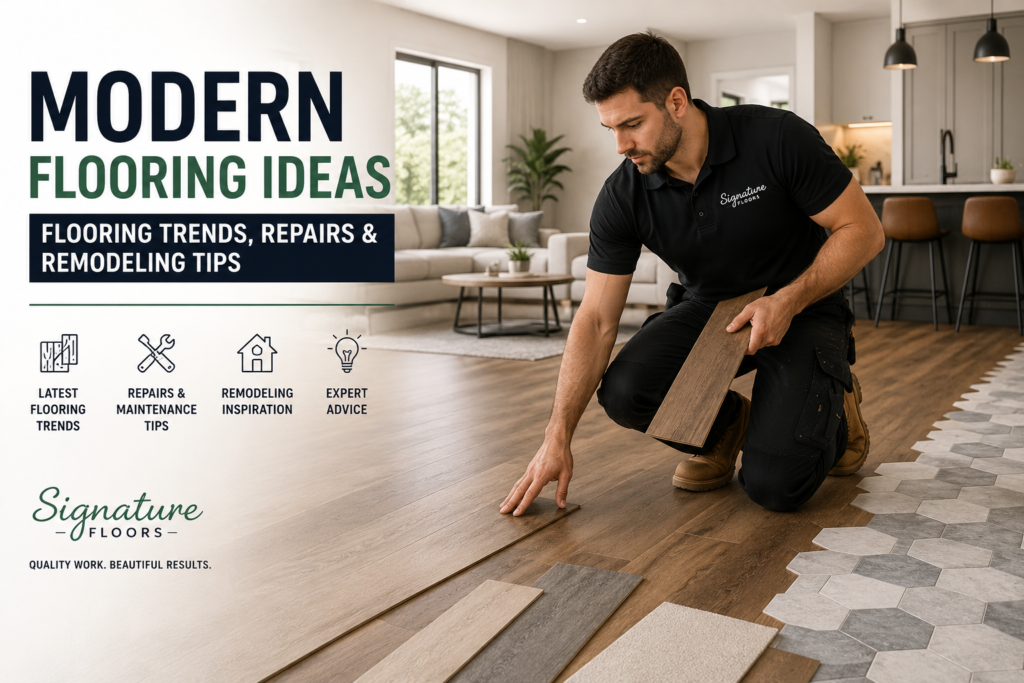
Modern Flooring Ideas: Flooring Trends, Repairs & Remodeling Tips
Here’s something odd: people will spend weeks agonizing over a paint colour, then walk into a flooring showroom and pick whatever the salesperson points at first. It happens more than you’d think. And it’s a shame, because flooring is arguably the one finish that shapes an entire room more than anything else in it.
If you’ve been scrolling through modern flooring ideas trying to figure out what actually makes sense for your home — not just what looks good in a magazine spread you’re in the right place. This isn’t a sales pitch dressed up as an article. It’s the kind of practical rundown we wish more flooring blogs actually gave homeowners: what’s genuinely trending right now, how to pick materials room by room, when a wooden floor repair beats tearing everything out, and what remodeling demolition really involves before your new floors go down.
Let’s get into it.
Why Flooring Matters More Than People Give It Credit For
Think about how long your floors stick around. You’ll repaint a wall in an afternoon. You’ll swap out a couch when it’s had enough. But flooring? Most people live with the same floors for ten, fifteen, sometimes twenty years. That’s not a small commitment.
And it’s funny the floor is the one surface in a room you’re never actually looking directly at, yet it affects how everything else reads. Warm oak hardwood makes a space feel lived-in and cozy. Cool grey vinyl plank makes the same room feel crisp and modern. Same furniture, same walls, completely different mood. A lot of Ontario homeowners don’t realize this until they’ve already renovated everything else and the floor is the last piece not pulling its weight.
That’s probably why flooring blogs get so much traffic these days people want to see real rooms, not just product photos on a white background, before they commit to something they’ll be stuck with for a decade.
What’s Actually Trending: Modern Flooring Ideas Worth Considering
Let’s clear something up first “modern” doesn’t mean cold, grey, and stripped down. Some of the most popular modern flooring ideas right now actually lean warmer and more textured than what was popular a decade ago.
Wide-Plank Hardwood
Remember those narrow 2¼-inch hardwood strips in older Ontario houses? They’re on their way out. Wide-plank boards often 5, 6, even 7 inches across show off more of the wood’s natural grain and pattern, and honestly, they just make a room feel bigger. Oak and maple are still the go-to species here, mostly because they cope well with how much our humidity swings between January and July. If you’re only going to borrow one idea from this whole list, this is probably the one worth stealing.
Luxury Vinyl Plank
I’ll be honest vinyl used to have a bit of a reputation problem. The old stuff was thin, obviously fake, and it curled at the edges after a few years. That’s not the case anymore. Luxury vinyl plank today does a genuinely convincing job of mimicking hardwood and stone, shrugs off water, and takes a beating from kids and dogs better than most natural materials would. For basements, mudrooms, kitchens anywhere moisture is a real concern it’s become the default recommendation for good reason.
Large-Format Tile
Bathrooms and kitchens are seeing a shift away from those small 12×12 tiles toward bigger formats. Fewer grout lines, less scrubbing, a cleaner overall look. And porcelain has genuinely gotten better at faking natural stone close enough that most guests won’t clock the difference, at a fraction of the price.
Mixing Materials Room to Room
This one surprises people. Instead of running one flooring type through the entire house, a lot of homeowners are now deliberately choosing different materials for different rooms hardwood in the living areas, tile where things get wet, vinyl in the basement. It sounds like it might look disjointed, but done well, it’s actually one of the smarter home flooring design decisions you can make, because each room gets a material suited to how it’s actually used rather than forcing one product to do everything.
Matte, Low-Sheen Finishes
Glossy floors are fading out. Matte and satin finishes are winning, particularly on hardwood and laminate, mostly because they hide scratches and everyday dust far better. They also just look more natural — less “just installed,” more “lived in and cared for.”
None of this is the kind of trend that’ll embarrass you in five years. These are practical shifts, not fashion statements, which is exactly why they’ve stuck around long enough to be worth talking about.
Picking Flooring Room by Room (Because One Material Rarely Works for the Whole House)
Here’s a mistake we see constantly: someone falls in love with a hardwood sample and decides it’s going in every room, including the basement bathroom. Bad idea. Different rooms have wildly different needs, and good home flooring design starts by admitting that.
Kitchens take a beating — dropped dishes, spills, constant foot traffic. Tile and luxury vinyl plank both handle that well. Hardwood can work too, but only if you’re prepared for the occasional scuff and a good protective finish.
Bathrooms are all about moisture, full stop. Tile remains the standard for good reason. If budget’s tight, vinyl is a completely reasonable alternative, especially in a powder room where nobody’s lingering long enough to scrutinize the floor.
Living rooms and bedrooms are lower-traffic and dry, which makes them the natural home for hardwood. If the budget doesn’t stretch that far, laminate has improved so much in recent years that it’s genuinely hard to spot from across the room.
Basements deal with moisture from the ground up and temperature swings most other rooms never see. Solid hardwood can warp down there. Vinyl, especially rigid-core, handles those conditions far better.
Entryways and mudrooms get dirt, road salt, wet boots — basically everything. Durable tile or vinyl beats anything that stains easily.
Going room by room like this, rather than picking one flooring type for the whole house, is really the backbone of solid home flooring design. It’s a point that comes up again and again in flooring blogs written by people who’ve actually lived through a renovation and learned this the hard way.
Matching Flooring to How You Actually Live
Beyond the room, it helps to be honest about your household.
Got pets or young kids? Scratch-resistant vinyl or laminate will outlast a softer hardwood under paws and toy trucks no contest. Dealing with allergies? Hard flooring traps less dust and dander than carpet, which is part of why carpet has quietly disappeared from so many main living areas over the past few years. Planning to sell in the next few years? Hardwood still carries real weight with Ontario buyers. Watching the budget? Laminate and vinyl both deliver a lot of visual payoff without the natural-material price tag, which matters a lot if you’re tackling several rooms at once.
There’s no universal “best” flooring just the best fit for your specific household. That distinction is really what separates useful modern flooring ideas from ones that just look nice in a photo but fall apart under real-life use.
Wooden Floor Repair vs. Replacing the Whole Floor
This might be the question we field the most. Hardwood is a real investment, and tearing the whole thing out isn’t always the right call sometimes it’s not even close to necessary.
When Repair Is the Smarter Move
If the damage is contained a handful of water-stained boards by the back door, one squeaky spot, some scuffs from moving the couch repair almost always wins. A proper wooden floor repair might mean swapping out a few individual boards, sanding out surface scratches, or refinishing the entire floor to even out the tone without pulling up a single plank.
Refinishing especially can work wonders. An old, dull, scratched-up hardwood floor can come out looking nearly new for a fraction of what replacement would cost assuming the wood itself is still sound underneath and it’s just the finish that’s had enough. Most experienced contractors will suggest trying this route first, and for good reason: it usually works.
Solid hardwood can typically be sanded and refinished several times over its life. That’s a big part of why it’s stayed popular despite costing more upfront than other materials — a well-timed wooden floor repair can buy you many more years before replacement ever enters the conversation.
When It’s Time to Replace
Replacement makes more sense when:
- Water damage has caused widespread warping or cupping, not just a spot or two
- The floor’s already been sanded down close to its wear layer and can’t take another refinish
- The subfloor underneath has structural damage
- You’re reconfiguring the layout enough that matching old boards to new ones just isn’t realistic
A contractor worth trusting will tell you straight which category your floor falls into. If someone’s pushing hard for full replacement without seriously weighing wooden floor repair first, get a second opinion — especially if the floor still looks reasonably good otherwise. This is advice you’ll find echoed across most honest flooring blogs: try the repair first, replace only when it’s genuinely warranted.
Remodeling Demolition: What Homeowners Should Know Before New Flooring Goes Down
Before new flooring can go in, the old stuff usually has to come out. This step gets underestimated constantly, especially when people are building out their renovation budget and timeline. Understanding what remodeling demolition actually involves ahead of time saves a lot of headaches later.
It’s Rarely as Simple as “Just Pull It Up”
Sometimes remodeling demolition is a quick afternoon pulling old carpet, for instance, is fast. Removing tile is a different story; you’re often dealing with thick-set mortar or stubborn adhesive that takes real elbow grease to clear off the subfloor properly.
Older Ontario homes sometimes have multiple layers stacked on top of each other vinyl over hardwood over the original subfloor, for example and that can turn a simple job into something bigger than anyone expected once demolition actually starts. That’s usually the reason behind the “unforeseen conditions” line in flooring quotes. It’s not a sales tactic. It’s just an honest acknowledgment that older homes tend to have surprises waiting under the surface.
The Subfloor Underneath Matters More Than People Expect
Once remodeling demolition clears away the old flooring, someone needs to actually look at what’s underneath. Rot, uneven spots, old water damage none of that should get covered up and ignored. Skip this step and even a beautifully installed floor will start showing problems eventually: squeaks, uneven patches, wear that shows up way sooner than it should.
It’s an easy step to skip on a tight budget, and it’s almost always a mistake to skip it. Build subfloor inspection into your remodeling demolition plan from day one rather than treating it as optional.
Dust, Debris, and a Realistic Timeline
Remodeling demolition kicks up dust and debris that needs proper handling, particularly with older materials. If your home predates the 1980s, it’s worth asking your contractor to check for asbestos in old flooring adhesive before anything gets torn out — a routine precaution, not a red flag.
One thing people consistently underestimate: demolition and subfloor prep often take longer than the actual flooring installation. Plan for that. Assuming installation day follows immediately after remodeling demolition wraps up is a common way renovation timelines go sideways.
Home Flooring Design: Getting the Pieces to Work Together
Good home flooring design isn’t only about choosing a material — it’s about how that material talks to everything else in the space.
Flow between connected rooms. In an open floor plan, keeping one material — or at least a consistent tone — running through connected spaces reads as intentional. Switching materials at every doorway usually doesn’t.
Transitions. Wherever flooring types actually change, say hardwood in the hallway giving way to tile in the bathroom, the transition strip matters more than most people expect going in. Done well, it looks planned. Done poorly, it looks like an afterthought — because it usually was one.
Tone consistency. Matching new flooring to existing trim, cabinetry, or stair treads avoids that slightly-off feeling you get when wood tones clash within the same sightline. Solid home flooring design always accounts for what’s already there, not just what’s going in.
Light. Dark flooring can shrink the feel of a dim room. Lighter tones tend to open things up in spaces that don’t get much natural light. Worth thinking through room by room rather than defaulting to one flooring colour for the whole house.
Honestly, this is where a lot of the appeal in modern flooring ideas actually comes from — not the material on its own, but how deliberately it’s woven into a broader home flooring design plan. It’s also a running theme in flooring blogs that show real before-and-after photos instead of just staged catalogue shots.
Keeping Floors Looking Good for the Long Haul
Different materials need different upkeep, and it’s worth knowing that going in rather than finding out the hard way.
Hardwood does best with regular sweeping, an occasional professional refinish, and keeping standing water off it staying on top of small stuff early can prevent a bigger wooden floor repair down the road. Laminate is fairly low-maintenance, but moisture at the seams is its weak spot, so wipe up spills promptly. Vinyl is about as easy as flooring gets day to day, handling both moisture and heavy foot traffic without much fuss. Tile holds up remarkably well over time, though grout lines need the occasional clean or reseal to avoid staining.
Small habits — felt pads under furniture legs, skipping harsh cleaners, mopping up spills right away genuinely extend the life of whatever flooring you’ve got, and they can push back the point where a wooden floor repair or full replacement becomes necessary.
Planning It Out: A Realistic Approach
If you’re weighing a flooring renovation as part of something bigger, a few steps tend to keep things sane:
- Get an actual professional assessment first. Before choosing between wooden floor repair and replacement, or locking in a material, have someone genuinely evaluate your current floors and subfloor.
- Budget for remodeling demolition, not just materials. Installation costs are only half the picture — removing the old flooring and prepping the space properly costs time and money too.
- Think room by room. Resist the urge to pick one flooring type for the entire house purely for simplicity’s sake.
- Ask for a realistic timeline. A contractor worth hiring will factor in remodeling demolition, subfloor repair, and any curing time certain materials need — not just installation day.
- Don’t skip the finishing details. Transition strips, baseboards, the small stuff — they make a bigger visual difference than people expect.
- Read a few flooring blogs before committing. Real project photos and honest reviews from other homeowners will tell you more than a showroom display ever will.
Working with a team that handles the whole process — remodeling demolition, subfloor repair, and installation — tends to cut down on the surprises you’d run into piecing the project together yourself, contractor by contractor.
Are Modern Flooring Ideas Worth Chasing, or Should You Play It Safe?
Fair question, and one we hear a lot. The honest answer: the two aren’t really at odds.
Most of today’s modern flooring ideas wide-plank hardwood, matte finishes, deliberately mixing materials by room aren’t trends in the fashion sense. They’re refinements of things that already worked, adjusted for how people actually live now. A wide-plank oak floor installed this year will still look perfectly appropriate in fifteen years, in a way a bold, of-the-moment material probably won’t.
If you’re unsure whether something’s a fleeting trend or a genuinely lasting choice, look at how long it’s been steadily gaining ground rather than how recently it showed up. Ideas that keep appearing across seasons of flooring blogs and design coverage tend to stick. The ones that flare up once and disappear usually don’t.
A Few Questions Homeowners Ask Us Often
How do I know if my hardwood can be repaired instead of replaced?
If the damage is limited to a handful of boards, or it’s really just the finish that’s worn thin, wooden floor repair or refinishing is usually on the table. Widespread warping, deep water damage, or a floor already sanded to its limit that’s when replacement makes more sense. Best to get someone to actually look at it rather than guess.
What holds up best in a house with kids and pets?
Luxury vinyl plank and tile flooring both take a beating well — scratches, spills, general chaos. Laminate’s a decent middle ground if you want something a bit more forgiving on the budget too.
How long does remodeling demolition usually take before new flooring can go in?
Depends entirely on what’s coming out. Carpet’s quick. Old tile, or multiple stacked layers of flooring, takes longer. Add extra time if the subfloor needs repair once remodeling demolition is finished.
Is vinyl a reasonable choice for an entire house, or just specific rooms?
It works throughout, honestly but it earns its keep most in moisture-prone spots like basements, kitchens, and bathrooms. Plenty of homeowners run hardwood through the main living areas and use vinyl elsewhere, which is a pretty common home flooring design approach around here.
Do I need to replace the subfloor when I put in new flooring?
Not necessarily. A level, dry, structurally sound subfloor can usually just be reused. Replacement or repair only becomes necessary if there’s water damage, rot, or real unevenness — the kind of thing that tends to surface once remodeling demolition is underway.
Wrapping Up
Flooring is one of those decisions that pays off in small, daily ways not the big dramatic reveal moments, just the ordinary satisfaction of walking through a home that actually feels right underfoot. Whatever you land on, wide-plank hardwood, durable vinyl, large-format tile, the choice really comes down to matching material to how a room gets lived in, not how it photographs.
If your hardwood still has some life in it, a wooden floor repair is almost always worth exploring before you jump to replacement. And if a bigger renovation is coming up, get a real handle on what remodeling demolition involves before you commit to a timeline you’ll end up frustrated by halfway through.
Take your time. Read a few honest flooring blogs. Get a proper assessment before you spend a dollar. And choose flooring that actually fits your home and the people living in it — not just whatever’s trending this month. That’s what makes the good modern flooring ideas worth the effort, and what makes the whole renovation feel worth it once it’s finally done.